

Testosterone
Testosterone is important to both genders


Testosterone is called the “male sex hormone” and is much higher in men, but it is important to both genders: everyone needs it, to support muscle, the heart, personality, self-confidence and libido.
In youth, Testosterone is mainly made in the testicles (or ovaries); but in fact, all our cells convert DHEA into TESTOSTERONE, for their own use.
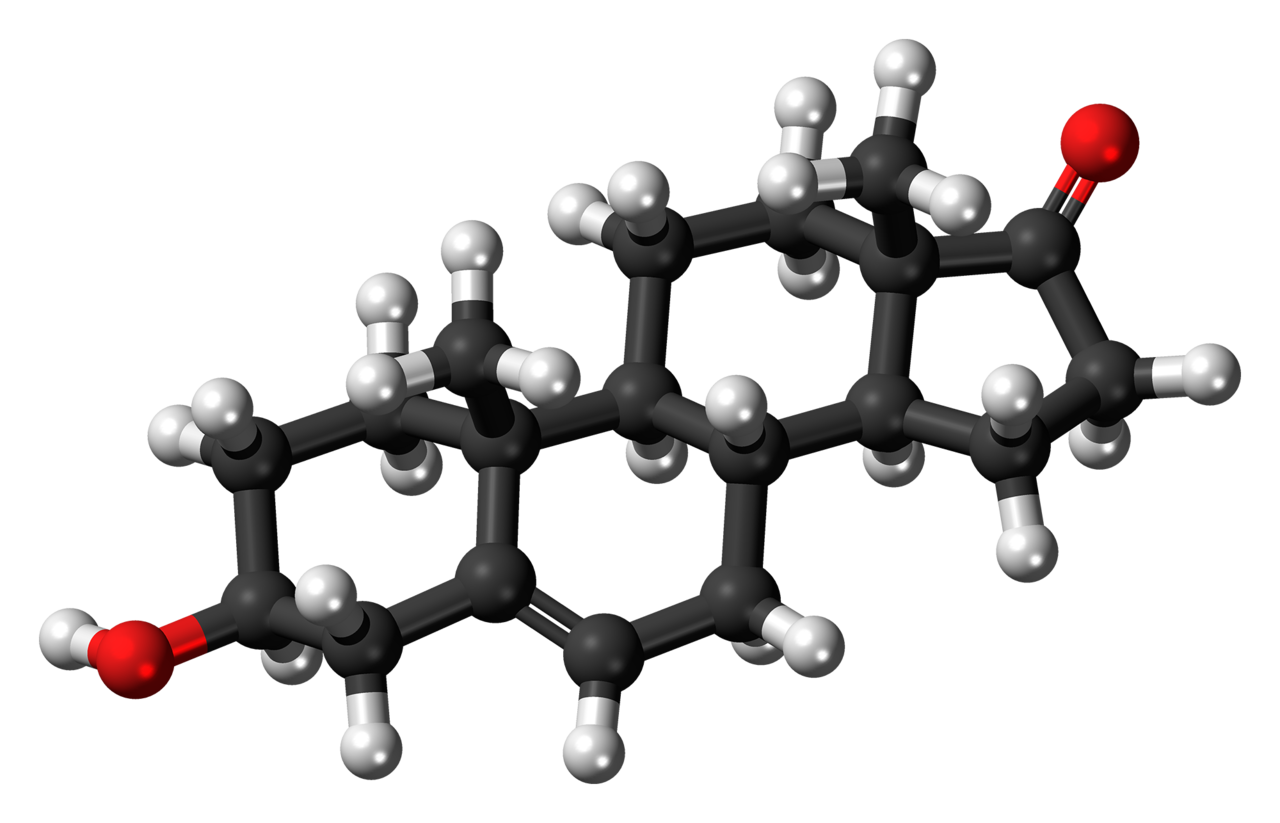
This conversion was termed “intracrinology” by Professor Fernand Labrie, [1], of Laval University, in Quebec.
Actions of Testosterone
Testosterone subserves maintenance and repair of muscle (the heart included), bone, skin, sweat glands and hair. It supports the libido in both males and females, maintaining self-confidence, minimising our anxieties and shielding us from depression.
Maximum testosterone production, approximately 10 times more in males than in females, begins at puberty. In boys, it is responsible for development of the male sex chacteristics; beard and body hair, deepening of the voice by enlargement of the larynx, Increased muscle mass, stronger, heavier bones, heightened self-confidence and development of the prostate and the penis.
In girls, testosterone production is insufficient to stimulate male pattern hair growth, hypertrophy of the larynx and other male characteristics; but it is important nevertheless, because it supports self-confidence, self-assurance, cognition and libido.
Male testosterone levels
Serum Testosterone remains high through the third decade, but a gradual fall in production, approximately 1% per year, starts at age 26 in both sexes. In women, the normal serum testosterone at age 20–25 is only 20-30 picomoles per litre, so a 1% loss per annum is easily demonstrated. However a 1%/year downward trend in Testosterone is hard to “see” in men, because their normal blood level spans a wide range (60–900 pmol/litre) and because the male’s Testosterone level varies, both with the time of day (highest at 8AM) and with physical and sexual activity.
Suffice it that although the testicles don’t lose function completely at “andropause”, as the ovaries do at menopause, by age 80 men’s testosterone production is 10-20% of what it was at 25.
Testosterone deficiency in the male
Testosterone deficiency is described below: note that the male testoterone level often doesn’t match with low testosterone symptoms: many older men with “low T” are fit, sexually active and cognitively sharp, while many men with mid-normal “T” present to the MD with Low-T problems, even in their 20s.
Female Testosterone levels

Women’s ovaries shut down completely in menopause, ceasing to produce both estrogen and testosterone. The peripheral cells continue “intracrine” testosterone production, but the amount made depends on the DHEA supply, so very little gets into the blood. Therefore In post-menopausal women, serum Testosterone tends towards zero, with reduced self-confidence and minimised libido.
Female Low Testosterone Syndrome
In contrast to the male’s experience, reduced testosterone level in the female tends to be symptomatic, since it is always associated with DHEA deficiency and often, with Intracellular Hypothyroidism (IH).
The “low DHEA/testosterone syndrome” (my terminology) in the female usually begins between age 26 and 30, but can at times be seen by age 20. It often presents with hypothyroid symptoms: hair loss, brittle fingernails, dry skin, vaginal dryness, reduced self-confidence, low libido, “fuzzy thinking”, poor glucose and cholesterol management, weight gain, etc.
The syndrome usually responds quickly and well, to oral supplementation of DHEA. However whether it responds to DHEA or not, thyroid tests, including TSH, FT4, FT3, T3 and Reverse T3, should be done, so as to diagnose or exclude IH, which is easily and safely treated with slow-release Triiodothyronine.
Childhood PTSD and Testosterone deficiency
Childhood PTSD from physical, mental or sexual abuse, often unrecognised, results in prolonged hypercortisolemia (Increased cortisol), and reduced DHEA, production. Cortisol suppresses T4 conversion into T3, so the net result is combined intracellular hypothyroidism and DHEA/testosterone deficiency in the teen years. Along with low DHEA, Testosterone, Progesterone and Allopregnanolone are also suppressed, further compounding the hypothyroidism.
Thus childhood PTSD sets the stage for DHEA/testosterone/deficiency, plus Intracellular Hypothyroidism and/or Progesterone/Allopregnanolone deficiency in the “20s” and severe, symptomatic deficiency by the “30s”. To my mind this is a significant background reason for depression and obesity in the “troubled teen” and the young adult.
Obviously, children caught in these circumstances should have a full thyroid hormone panel of tests, to diagnose and treat the Low T3 Syndrome if it is present.
CAVEATS
There need not have been a frank episode of PTSD: chronic neglect, or the subjective perception of inequity and unfairness in the family dynamic, is sufficient to Induce the Hypercortisolism, which leads to the Low T3 Syndrome, in the child.
The best measure of Testosterone-maufacturing capability in the female, is to check the DHEA level: DHEA is the precursor of “T”, so its level gives an accurate measure of The individual’s capacity for T production. DHEA peaks a little earlier in the morning than testosterone does, but it doesn’t rise and fall with exercise and/or sex, as testosterone does. Therefore “what you see, is what she’s got”.
The peripheral cells have a family of 30 (or so) enzymes, which the cell employees, to convert DHEA into its own mix of “microhormones”. Each cell type employs its own selection of enzymes to “mix and match” an individual hormone cocktail for its day-to-day activities and its internal maintenance and repair.
As the DHEA supply falls, all cells begin to suffer from DHEA deficiency, but some cell types are more sensitive to “DHEA starvation” than others, so the visible and symptomatic effects vary from person to person.
Surveillance and management
For “best practice” all patients should, at the time of admission to a family practice, routinely be investigated with a “thyroid profile“, including TSH, free T4, free T3 and reverse T3.” The thyroid profile should be repeated yearly and ad hoc: in particular, women presenting with hair loss, brittle fingernails, infertility, recurrent spontaneous abortion and other symptoms reminiscent of hypothyroidism, should be referred for thyroid testing.
If this were done, with diagnosis and correction of IH as necessary, (1), affected individuals would be relieved of the loss of self-image, poor sleep and low-grade depression which reduces the quality of life of so many young women and (2), the frequency of visits to the family doctor would decline and the net cost of our medical system would be reduced.
EVERYBODY is in the game !
We all, males and females, need, make and use Testosterone, and sooner or later we all become Testosterone deficient. So we all develop some symptoms and/or signs of low testosterone eventually.
The Baltimore Longitudinal Study of Aging deems the incidence of hypogonadism * to be 20% in men over 60, 30% in men over 70 and 50% in men over 80 years of age (that may be a little optimistic!).
* I hate the term “Hypogonadism”: the problem is low testosterone, not low gonads !
So: what happens in testosterone deficiency?
(1) Nuisance-value symptoms:
Low libido
Erectile dysfunction
Fatigue.
Poor motivation
Poor sleep
Mood swings
Body and facial hair loss
Difficulty concentrating
Depression
Irritability
Low sense of well-being ………………………….. HEY, WAIT A MINUTE !
Those are stress-related low-thyroid symptoms !
Some are low-Allopregnanolone symptoms !
The symptoms are mixed, due to Cortisol’s suppression of DHEA, Testosterone, Progesterone, Allopregnanolone, Thyroid 3 and sometimes, Estrogens.
Also, our hormones go down with age, so single-hormone deficiency is rare.
(2) High-grade problems:
Anaemia
Reduced bone mass and increased bone fragility
Reduced muscle mass
Heart “events”: sometimes, heart failure
Obesity, with or without cholesterol and glucose management aberrations
Cognitive decline
Various syndromes, diseases and illnesses, most of which are “DHEA-responsive”, can be considered to be reactions of tissues sensitive to Testosterone deficiency, (or) reduction of Testosterone availability, below their threshold of need.
Testosterone replacement Therapy
Men
Testosterone replacement therapy (TRT) for men with symptomatic deficiency has benefits, such as increased libido and energy level, improved bone density, Increased red blood cell production, increased muscle strength and cardioprotective effects: this is well documented.
Women
TRT does precisely the same for women, but testosterone’s awkward delivery problems (destruction of orally delivered testosterone by the liver, the liability to transmission of testosterone creams to sexual partners or children and the “spike and crash” problems associated with injectables) renders testosterone unsatisfactory for treating them.
DHEA is preferable: in the female, oral DHEA translates within hours, into increased serum testosterone and the serum DHEA elevation is of no metabolic consequence. The dosage of oral DHEA can therefore be monitored with serial estimations of serum testosterone.
